Access to suitable drinking water is an important requirement for healthy and sustainable communities. In areas where existing water sources have quality concerns, appropriate treatment and regular monitoring can help communities obtain water that is suitable for drinking.
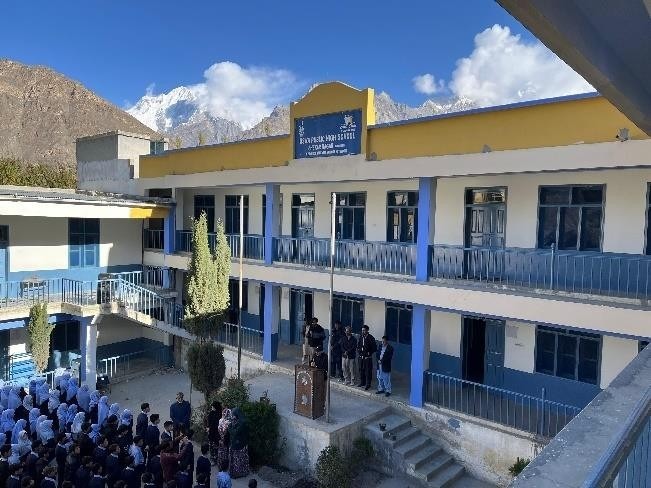
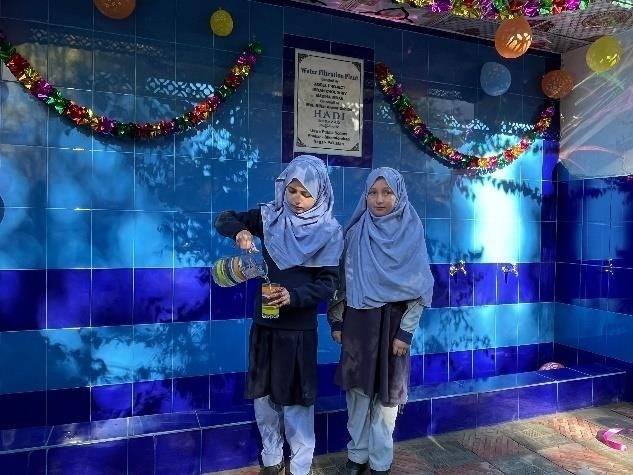
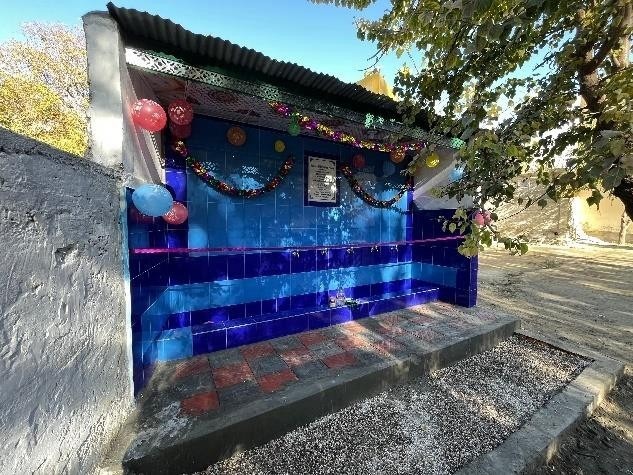
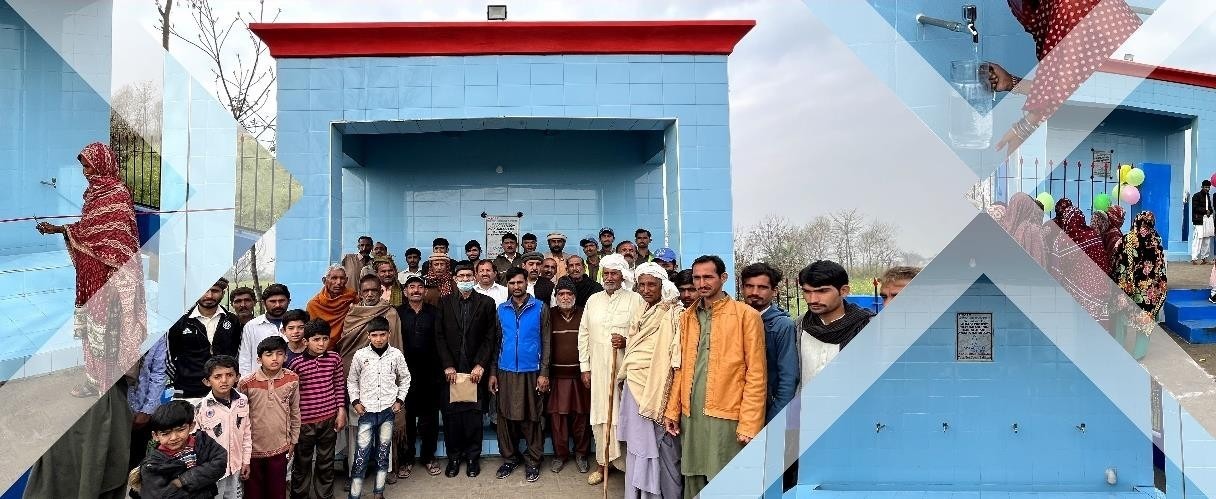
To address this need, a Water Filtration Plant at Uswa Public School, Phekar, Nagar was installed in October 2025 under the Water for Life initiative. The project is located in Uswa Public School, Union Council Phekar, Tehsil Sikander Abad, District Nagar, Gilgit-Baltistan.
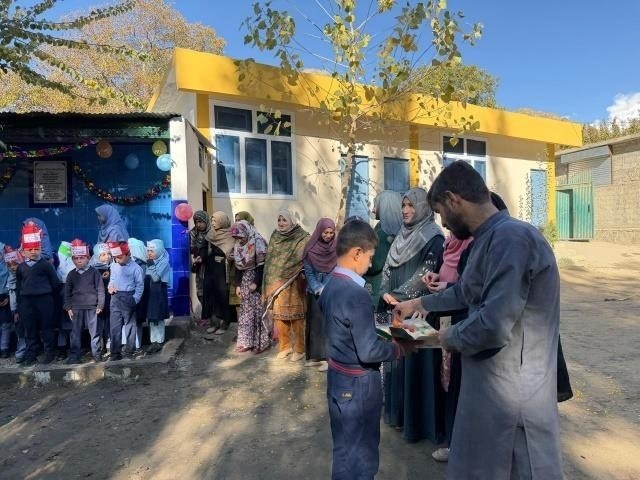
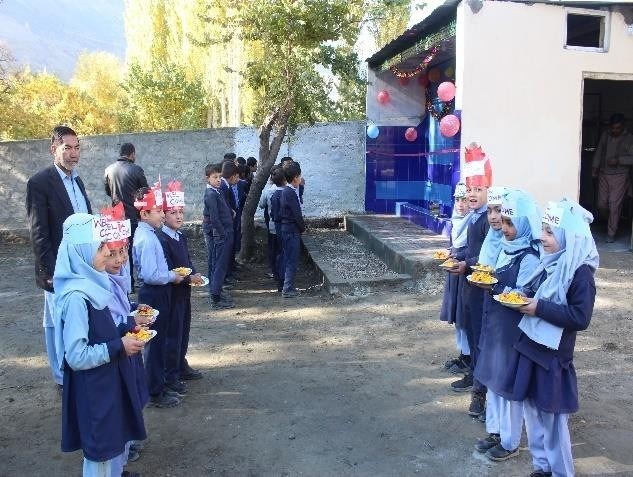
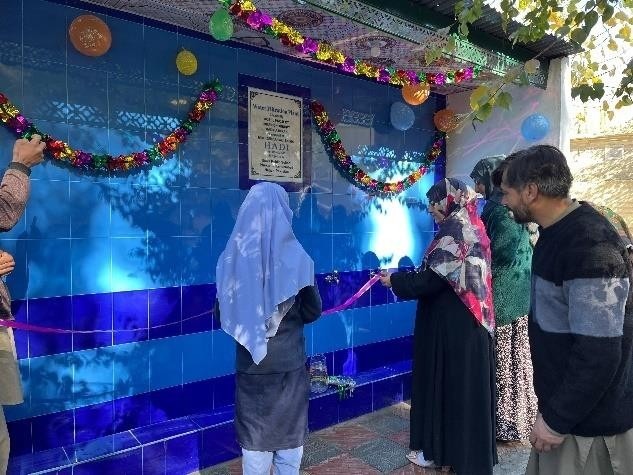
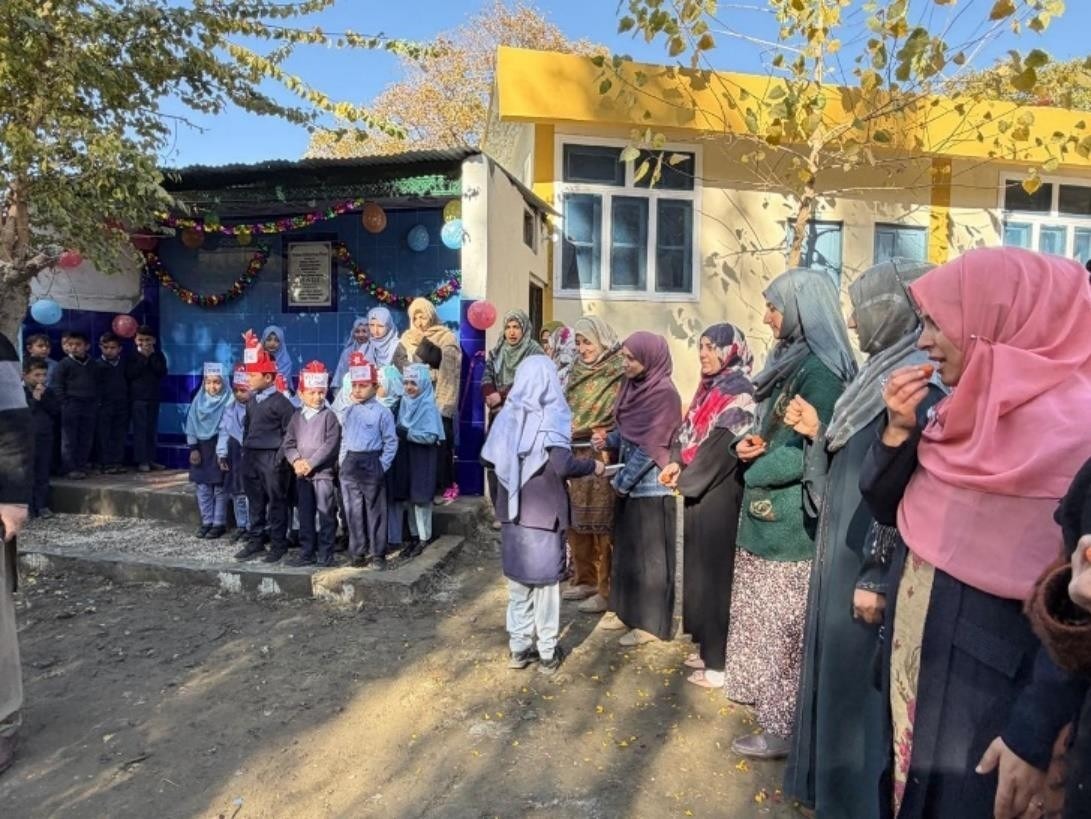
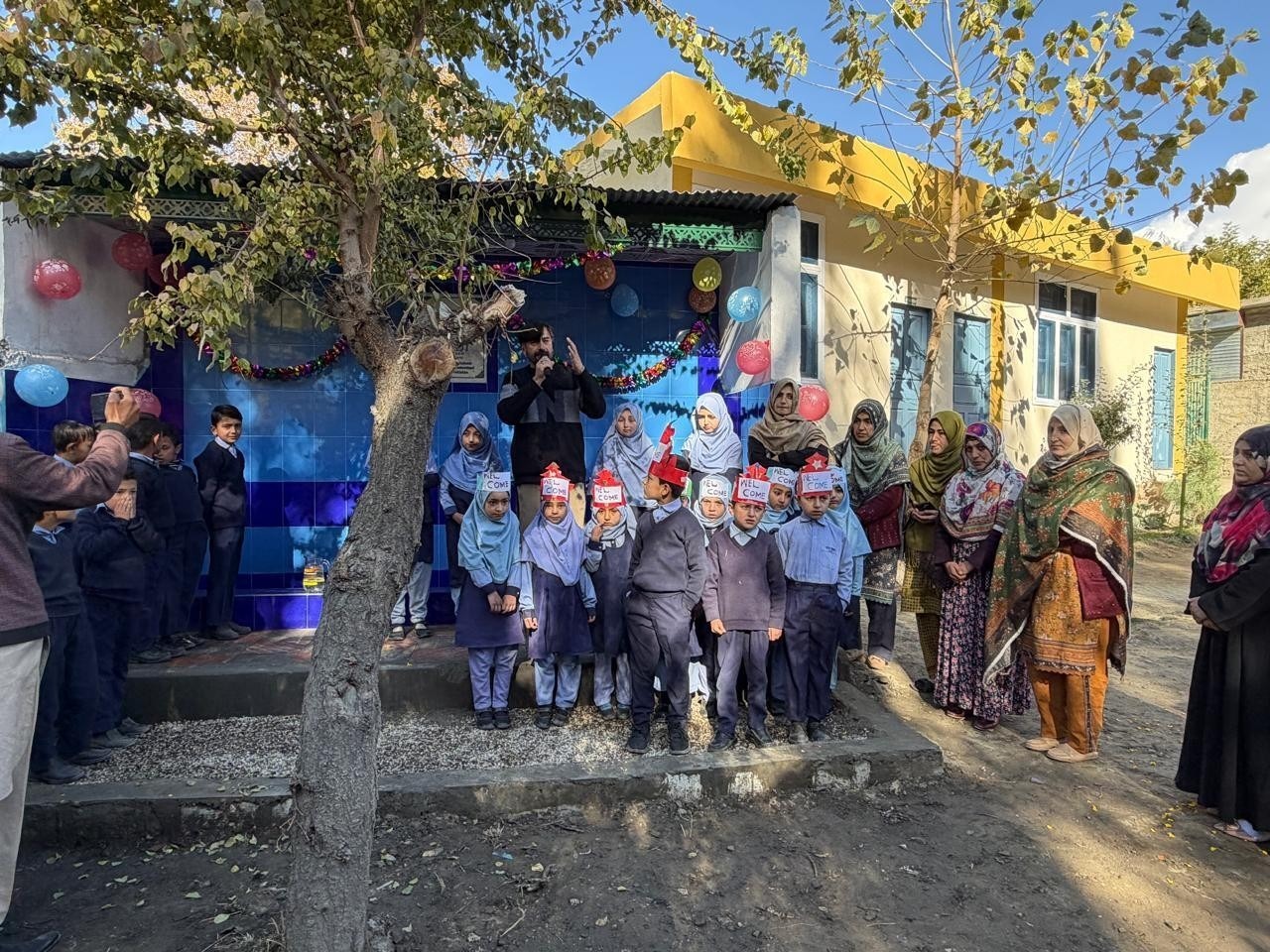
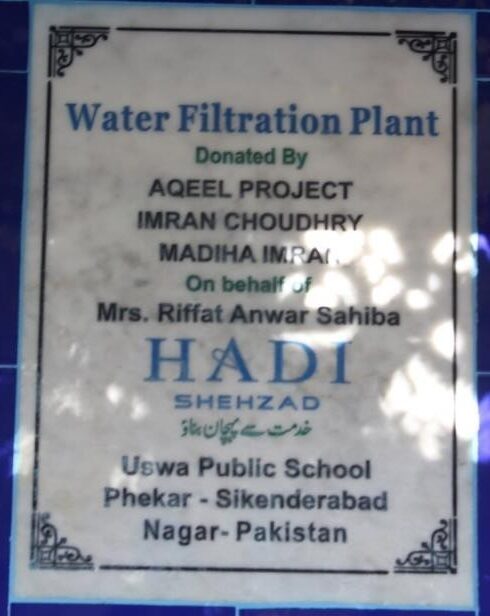
The project was donated by Hadi Shehzad and completed on 22 October 2025, before being officially inaugurated on 24 October 2025.
Water Filtration Project at Uswa Public School, Nagar
The project was initiated following concerns from the local community about the quality of its existing drinking-water supply.
According to the project report, water testing was carried out before installation and the existing water was assessed as unsuitable for drinking. A filtration plant was therefore installed to provide a treated water source for the community.
Following installation and commissioning, another water test was conducted. The project report states that the treated water was found fit for human consumption.
Project Highlights
- Project: Water for Life – Water Filtration Plant
- Project Tag: 17/2025
- Location: Uswa Public School, Phekar, Nagar, Gilgit-Baltistan
- Plant Capacity: 250 litres per hour
- Pump Motor: 1.5 HP
- Constructed Area: 208 sq. ft.
- Plant Room: 13 × 13 × 8 ft.
- Project Start: 1 October 2025
- Project Completion: 22 October 2025
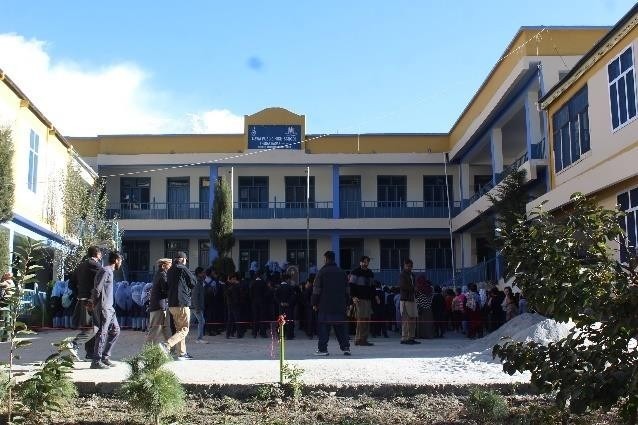
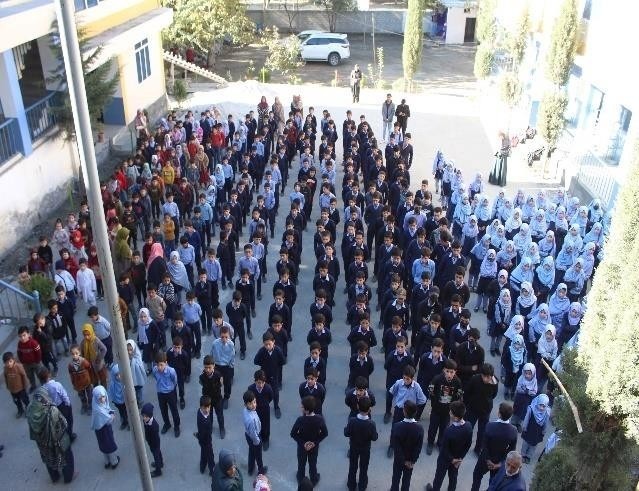
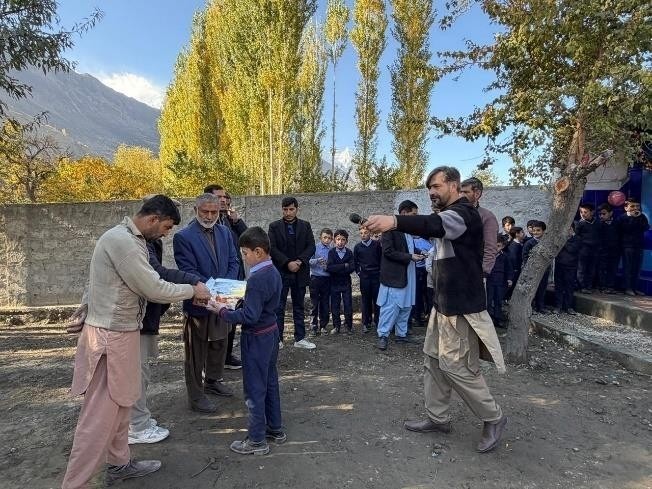
- Inauguration: 24 October 2025
- Inaugurated By: Mrs. Shakira Sardar
- Donated By: Hadi Shehzad
- Donated For: Aqeel Project, Imran Chaudhry and Madiha Imran on behalf of Mrs. Riffat Anwar Sahiba
Supporting the Community in Phekar, Nagar
The Uswa Public School water filtration plant was established to improve local access to treated drinking water.
According to the project’s beneficiary statistics, the facility is expected to support:
- 280 men
- 300 women
- 200 children
- 300 livestock
This represents approximately 780 people, in addition to livestock benefiting from the project.
With a reported capacity of 250 litres per hour, the filtration plant provides a local facility for treating water for community use.
How the Water Filtration Plant Works
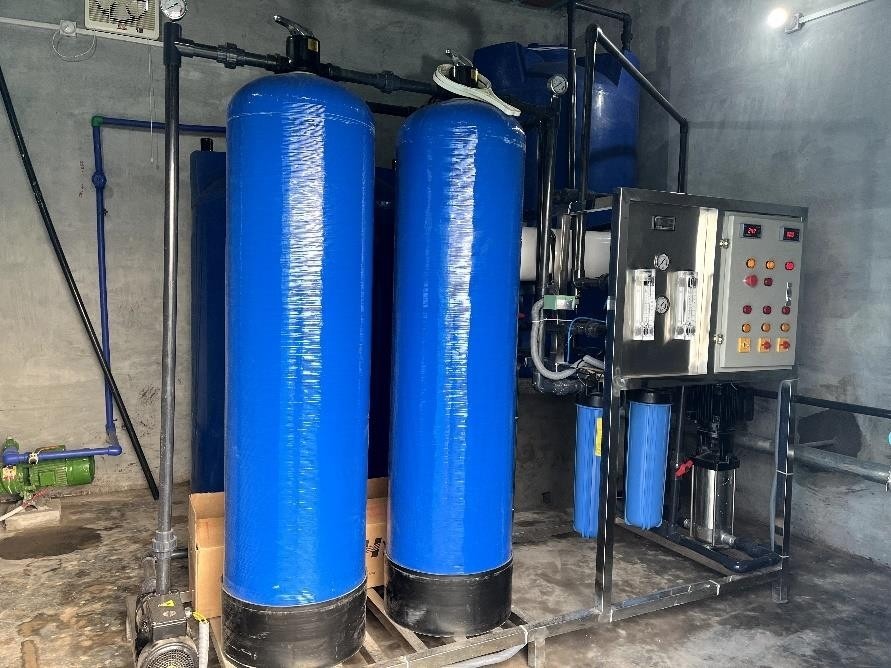
The project documentation describes a cartridge-based filtration system that treats incoming water through specialised filter cartridges.
Depending on the cartridges and filtration stages used, these systems can be designed to target sediment, suspended particles and other impurities. The documentation describes filtration media such as sediment cartridges and activated carbon, with additional treatment stages potentially used according to water-quality requirements.
Regular maintenance and replacement of filtration cartridges are important for maintaining the system’s performance over time.
From Water Testing to Installation
The water filtration project at Uswa Public School followed a structured implementation process.
The project began with an assessment of the community’s water concerns and pre-installation water testing. A local volunteer committee was then established to support planning and construction.
The implementation included:
- Assessing the local drinking-water situation.
- Conducting water testing before installation.
- Establishing a community volunteer committee.
- Reviewing existing filtration plants in nearby areas.
- Selecting and verifying the filtration plant vendor.
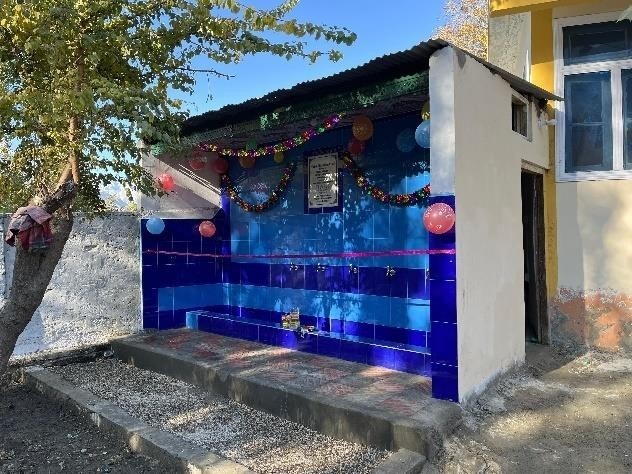
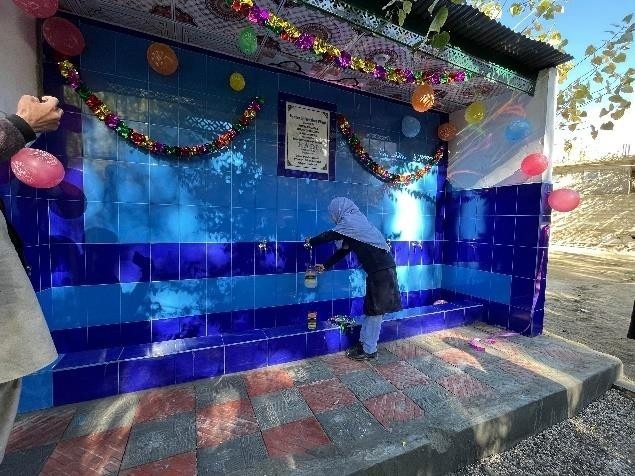
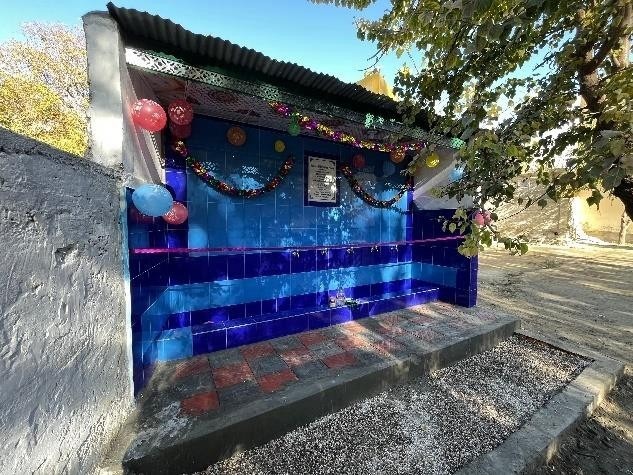
- Constructing a dedicated filtration room.
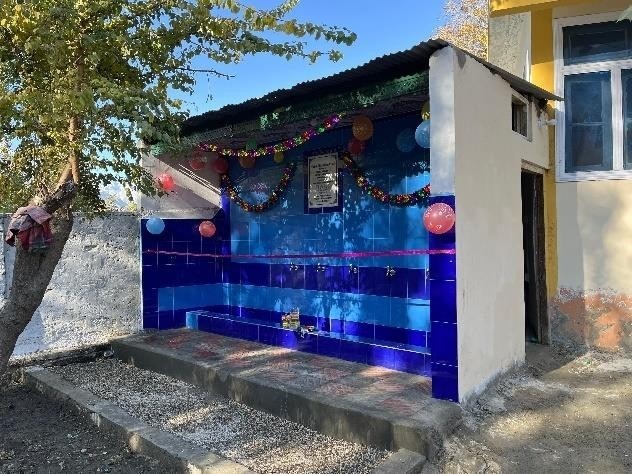
- Preparing a tiled water-filling area.
- Installing the filtration equipment.
- Conducting a test run and commissioning the plant.
- Performing post-installation water testing.
- Officially inaugurating the facility.
- Conducting site visits to monitor progress.
Community Participation
Community involvement played an important role in completing the project. Local volunteers assisted with various construction activities, helping support implementation and reduce project costs.
The local volunteers listed in the project report were Imdad Hussain, Sabir Hussain, Abid Hussain, Muhammad Ali, Assadullah and Yaseen.
Project staff also contributed to planning, coordination, construction supervision, installation and monitoring.
Hadi Shehzad’s Support for the Water Project
The project documentation identifies Hadi Shehzad as the donor of the Uswa Public School Water Filtration Plant.
The facility was donated for Aqeel Project, Imran Chaudhry and Madiha Imran on behalf of Mrs. Riffat Anwar Sahiba.
By investing in permanent community infrastructure, the project was designed to provide ongoing value rather than only short-term assistance.
Building Long-Term Access to Treated Water
The completion of the 250 LPH Water Filtration Plant at Uswa Public School, Nagar provides a dedicated local facility for water treatment.
With approximately 780 people expected to benefit, the project demonstrates how community participation, organised project implementation and investment in water infrastructure can help address local water-access challenges.
Continued maintenance, periodic water-quality testing and timely replacement of filtration components will be important for maintaining the facility’s effectiveness over the long term.
Visit. Witness. Give Directly.